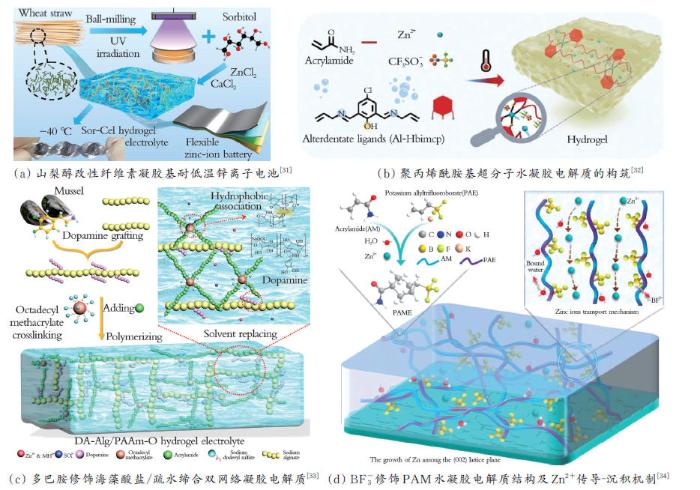
Aqueous zinc?ion batteries demonstrate broad application prospects due to their high safety,low cost,excellent electrochemical performance,and other characteristics.This review systematically summarizes structural regulation strategies for flexible electrolytes tailored for aqueous zinc?ion batteries.It focuses on the construction methods,ion conduction mechanisms,and mechanical reinforcement approaches of hydrogel and polymer electrolytes.In addition,it analyzes the key challenges related to electrochemical stability,interfacial compatibility, and environmental adaptability.This work aims to advance the development of flexible electrolytes for enhancing the electrochemical performance of aqueous zinc?ion batteries and provide theoretical guidance and research references for the design and functional realization of flexible electrolyte materials.
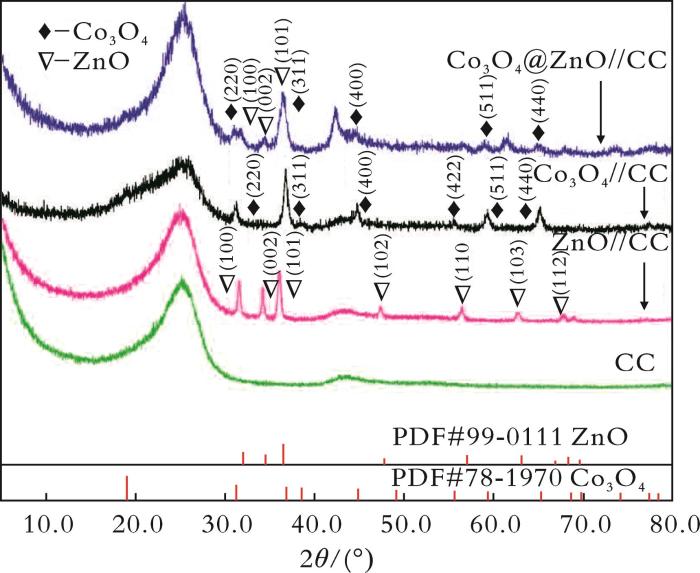
To address the issues of low theoretical specific capacity, poor fast?charging performance, and insufficient safety in commercial graphite anode materials, a new type of self?supporting composite electrode was constructed, which achieved an improvement in the comprehensive electrochemical performance of lithium?ion batteries. Using carbon cloth (CC) as a flexible substrate, a Co3O4/ZnO heterojunction structure was grown in situ on its surface via the hydrothermal method, followed by heat treatment, successfully preparing a self?supporting Co3O4@ZnO//CC anode material. Microstructural and compositional analyses were conducted using characterization techniques such as XRD, SEM, TEM, and XPS, while electrochemical tests were employed to evaluate its lithium storage performance. Results demonstrated that the three?dimensional porous nanosheet array of Co3O4@ZnO effectively mitigates volume changes and facilitates electron transport. The Co3O4@ZnO//CC electrode exhibited an initial discharge and charge specific capacity of 3.96 and 3.28 mA?h/cm2 at 2.00 mA/cm2 current density, respectively, with a coulombic efficiency of 82.83% in the first cycle and a capacity retention rate of 56.40% after 100 cycles. Both its cycling stability and rate performance outperformed those of Co3O4//CC and ZnO//CC electrodes.
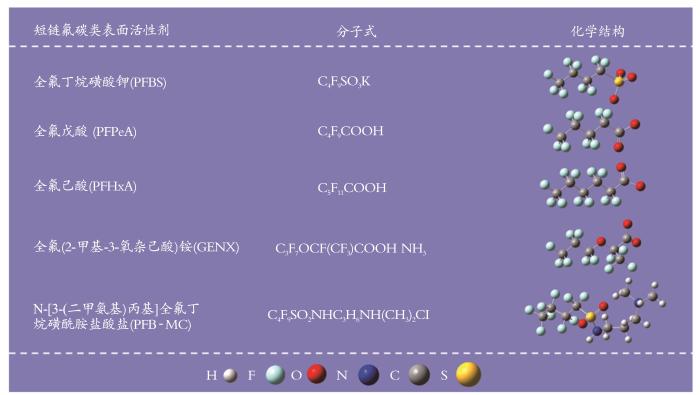
Due to regulatory restrictions on long?chain fluorocarbon surfactants, the synergistic mechanisms of short?chain composite systems developed as alternatives remain unclear, hindering the advancement of high?performance and environmentally friendly firefighting agents. This review systematically outlines optimization strategies for short?chain fluorocarbon firefighting agents, including molecular engineering approaches (chain?length control, zwitterionic design) and compounding techniques (fluorocarbon/hydrocarbon synergy). By synthesizing existing research, it highlights that C4—C6 short?chain surfactants strike a balance between surface activity and environmental friendliness and composite systems significantly reduce critical micelle concentration and fluorine consumption, simultaneously enhancing foam stability. The review summarizes synergistic mechanisms in compounding including electrostatic interactions between anions and cations promoting dense film formation, and conformational matching inhibiting aqueous migration. It also establishes quantitative relationships spanning from microscopic molecular arrangements to macroscopic properties, such as interfacial tension and foam stability. This study provides theoretical reference for understanding the mechanism of compounding and promoting the rational design of fire extinguishing agents.
With the continuous rise of energy conservation and environmental protection standards, optimizing the high temperature cleaning performance of lubricating oil and reducing engine piston deposits have become a top priority in the field of lubricating oil. In this study, the heat pipe oxidation test was adopted to conduct oxidation deposit tests on ethylene?propylene copolymer (OCP?type viscosity index improver)at 250, 280, and 310 ℃ respectively. Characterization of the wall deposits was performed using Fourier Transform Infrared Spectroscopy (FT?IR), Scanning Electron Microscopy/Energy Dispersive Spectroscopy (SEM/EDS), and 1H Nuclear Magnetic Resonance (1H?NMR) to analyze their morphological features, elemental composition, and functional group structures. The results indicate that at a temperature of 250 ℃, the deposit contents of the base oil and the mixed sample (1% mass fraction of OCP?type viscosity index improver + 99% mass fraction of base oil) were relatively close. The deposit amount of the mixed sample was greater than that of the base oil at 280 ℃, and the contents of C and S elements increased in this deposit, while the content of O element decreased. Due to the synergistic effect between the OCP and the base oil, the changes in hydrocarbons and oxygen?containing functional groups in the deposits of the mixed sample were reduced at 310 ℃, and sulfides escaped in the form of SO?, leading to a decrease in S element content.

This study uses short?term gas supply prediction for storage facilities as the seasonal peak?shaving volume.This approach ensured supply reliability while improving the operational efficiency and economic benefits of storage facilities,tackling the supply?demand imbalance caused by seasonal peak?valley differences.Accurate prediction of downstream users' natural gas demand could effectively reflect the required short?term gas supply from storage.Daily natural gas consumption data from a specific region during 2021-2024 was selected.Incorporating temperature variations and date types,the study comprehensively considers trend components,seasonal patterns, and holiday effects.A Prophet forecasting model suitable for predicting short?term gas supply from storage was proposed.Four performance metrics?Mean Absolute Error (rMAE),Mean Absolute Percentage Error (rMAP),Root Mean Square Error (rRMS),and Coefficient of Determination (R2)?were used to comparatively evaluate the Prophet model against five other common models (including STL decomposition and VARMAX).The results show that the Prophet model achieves an rMAE of 13.15 m3,an rMAP of 2.71%,an rRMS of 16.52 m3,and an R2 of 0.99 on the test set,which is significantly superior to other models.During the winter gas consumption peak period,its prediction error can be controlled within 5%.By integrating two exogenous variables?climatic conditions and date types.The Prophet model can accurately capture the seasonal and sudden fluctuation characteristics of natural gas consumption of downstream users, improve the prediction accuracy of gas storage supply,and provide key data support for peak?shaving and supply guarantee of gas storage reservoirs.

Currently, many methods for calculating oil saturation primarily rely on static methods, which are mainly used to calculate initial oil saturation and are not suitable for calculating dynamic oil saturation during the development process. To address the limitations of existing dynamic calculation methods, a general relationship between the oil?water relative permeability ratio and water saturation was derived based on the general formula for oil?water relative permeability. Through the ln(1+x) series expansion, a trinomial formula was obtained, which enables full?range fitting of the oil?water relative permeability ratio and facilitates engineering application,overcoming the drawback that previous linear formulas could only fit the middle range. By establishing the relationship between the oil?water relative permeability ratio and water cut through water cut definition and radial flow formulas, we further develop a cubic polynomial function relationship between water saturation and water cut. When the water cut of a block, single well, or single layer is known, this relationship can be used to calculate water saturation at different development stages, and then oil saturation can be derived. The research method can provide a basis for the deployment of encryption well position, fine water injection and other adjustment measures.

Annular reservoirs with gas cap and edge water face the dual challenges of gas channeling and water invasion during development,requiring timely adjustment of development strategies based on development effect evaluation.The Du X Well Block of Liaohe SG?1 Oilfield is a thin?bedded annular reservoir with gas cap and edge water developed by using natural energy.Rapid reservoir pressure decline leads to premature edge?water encroachment and gas?cap channeling,which adversely affects development efficiency.Through numerical simulation and formula?based method for development scheme comparison,it is found that thin?bedded reservoirs have small pay zone thickness and weak shielding and blocking effect on gas.Compared with water flooding,gas injection is more prone to premature breakthrough and gas channeling,resulting in poor development effect.An innovative water flooding mode is designed,featuring energy supplementation via barrier water injection at the lower part and oil production at the upper part.Injection parameters including injection rate,injection volume,and injection?production ratio are optimized using methods such as critical flow rate analysis and Weng Wenbo' Logistic Cyclical Method.The effects of inhibiting edge?water encroachment,suppressing top gas channeling,and tapping remaining oil potential are investigated.The results indicate that barrier water injection at the lower part effectively improves the block recovery factor by 3.5 percentage points compared with gas drive development and 6.5 percentage points compared with natural energy development.This study provides significant guidance for the efficient development of gas?cap edge?water annular thin?bedded reservoirs.

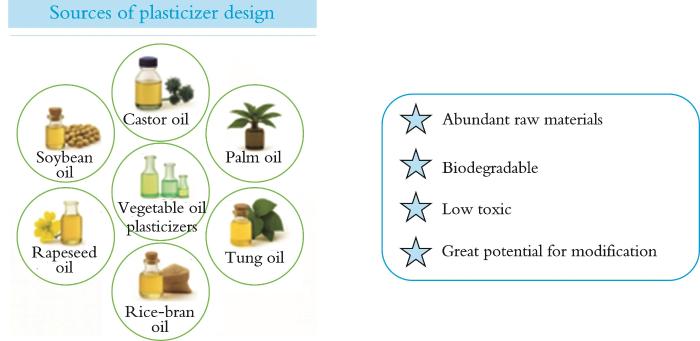
Polyvinyl chloride (PVC) is widely used in cables, building materials, artificial leather and packaging fields due to its excellent mechanical properties and good processability. However, because of its high rigidity, it needs to rely on plasticizers to endow flexibility. This paper systematically summarizes the research progress on the performance regulation of PVC by polyester plasticizers, with a focus on the structural design, synthesis methods and their application effects. Through comparative analysis of different molecular structures, branching structures and end group functionalization strategies, the influence mechanisms of polyester plasticizers on the thermal stability, mechanical properties, migration behavior and processing rheology of PVC are summarized. The results show that the rational design of the molecular structure of polyester can significantly improve the plasticizing efficiency and compatibility, and reduce the risk of plasticizer migration and volatilization. The conclusion holds that the source of bio?based monomers and green synthesis technology are the key directions for the development of polyester plasticizers. In the future, efforts should be focused on multi?functional collaborative design and large?scale preparation to promote their application in fields such as medical care, cables, and packaging, and achieve the sustainable development of high?performance and environmentally friendly PVC materials.
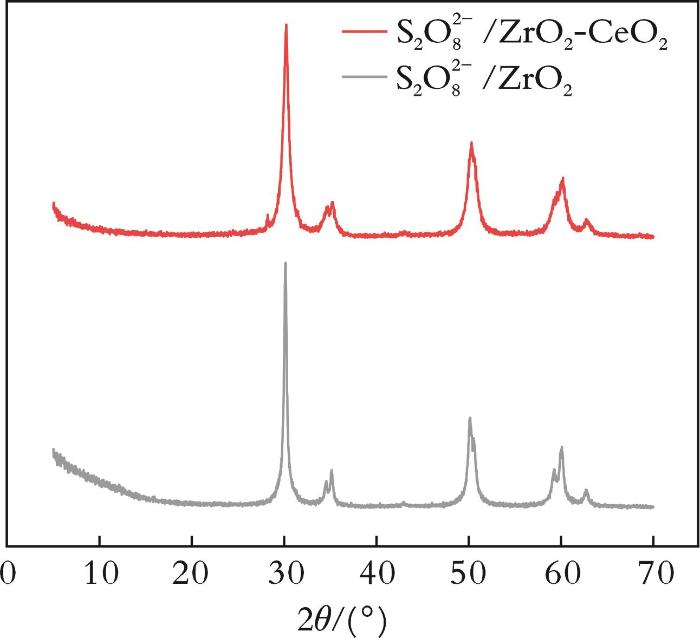
Solid superacid catalyst S2O